Friday, February 01, 2008

Pictures: Bull-Size Rodent Found

See the world's largest known rodent — and the prehistoric beast's closest living cousin.
Read the full story.

An illustration (top) and sculpture flesh out the fossilized skull of the largest rodent ever found. (Read on.)

The South American "rat" lived two to four million years ago and weighed about 2,200 pounds (1,000 kilograms), based on an analysis of its 21-inch-long (53-centimeter-long) skull, a new study says.

The rodent may have used its bulk and fearsome teeth to fend off attacks from saber-toothed cats and giant meat-eating birds, the researchers added.

Though found in a cliff in Uruguay, the animal lived in lowland rain forests close to river deltas or estuaries, where it feasted on fruit and aquatic plants, said the study, published in the journal Procedings of the Royal Society: B.

• More Photos in the News
• Today's Top 15 Most Popular Stories
• Free Email Newsletter: "Focus on Photography"

—Image courtesy Royal Society/reconstruction (drawing and sculpture) by Gustavo Lecuona

Royalty Free Image of the Day: Architecture and Famous Buildings: A foggy night at Stirling Castle, Scotland, UK


Photography lovers who liked this also liked:

form art
form canvas prints
form framed prints
form prints
form posters
form greeting cards
form photos

circle art
circle canvas prints
circle framed prints
circle prints
circle posters
circle greeting cards
circle photos

door art
door canvas prints
door framed prints
door prints
door posters
door greeting cards
door photos

ward posters
neo gothic metal prints
city views metal prints
city view metal prints
millenium metal prints


Thursday, January 31, 2008

Welcome to PMA 08 Show in Las Vegas

Las Vegas Convention Center:
This week, PMA 08 kicks open its doors to showcase the latest photo innovations and strategies to hit the memories market.PMA 08 hosts photo retailers, professional photographers, mass merchandisers, professional labs, custom picture framers, scrapbook retailers and event videographers from around the world.Keep an eye out for the latest event news and updates at the PMA Show Daily.

The PMA 08 International Convention features more than 200 business education sessions, while PMA 08 Trade Show offers more picture-related products than any other show.

The show started today and will end on February 2, 2008

Read more at pmai.org/

Royalty Free Photo of the Day: Interested in ancient rock art: The petroglyphs in Tsegi Canyon / northern Arizona are well worth a visit


Photography lovers who liked this also liked:

pathway art
pathway canvas prints
pathway framed prints
pathway prints
pathway posters
pathway greeting cards
pathway photos

gardening art
gardening canvas prints
gardening framed prints
gardening prints
gardening posters
gardening greeting cards
gardening photos

relaxing art
relaxing canvas prints
relaxing framed prints
relaxing prints
relaxing posters
relaxing greeting cards
relaxing photos

stair metal prints
stairs metal prints
stairway metal prints
steps metal prints
safety metal prints


Wednesday, January 30, 2008

Nikon COOLPIX S210, S520, S550 and S600

Nikon has more COOLPIX cameras on the way, with the new S-Series COOLPIX S210, S520, S550 and S600 added to the Style Series line of compact digital cameras. Along with stylish colors like Plum, Cool Blue and Ruby Red, these new COOLPIX cameras boast Nikon's EXPEED imaging processing engine that helps produce sharp, clear photos. The new COOLPIX S-Series cameras are scheduled to be released in the U.S. in March 2008.

The super thin, just 18mm, (less than 3/4-inch) COOLPIX S210($179.95) offers 8 effective megapixel resolution, a 3x Zoom-NIKKOR glass lens, Electronic Vibration Reduction (VR) Image Stabilization technology, and a quality-crafted aluminum body. The S210’s slim, elegant camera design comes in an array of color options such as plum, graphite black, cool blue, and brushed bronze, delivering high performance and ease-of-operation.

The slim, ergonomic COOLPIX S520 ($229.95) boasts a streamlined profile, 8 effective megapixels, a 3x Zoom-NIKKOR lens, Optical Vibration Reduction (VR) Image Stabilization, and a quality-crafted aluminum body. Style-conscious consumers will love the S520's design, in addition to the latest Nikon technologies that make this camera compact, easy to use, and capable of capturing breath-taking images. Additionally, the S520 adds the "Food Mode" to its existing scene modes. Food Mode allows for users to capture beautiful close-up images of food at high ISO settings in restaurants or other locations where flash photography is not permitted.

The COOLPIX S550 ($229.95) elegantly packs high performance and advanced functions into an ultra-compact body. The S550 boasts 10 effective megapixels of sharp resolution, a 5x Zoom-NIKKOR lens, and Electronic Vibration Reduction (VR) Image Stabilization and two new modes that enhance portrait photography: Smile Mode, which automatically triggers the shutter when the subject smiles, as well as Blink Warning, which displays a warning message when the subject has blinked. The COOLPIX S550 will be available in an array of new colors - plum, cool blue and graphite black - allowing consumers to not only express themselves with their photos, but with their cameras as well.

A standout in the slim-compact camera category, the COOLPIX S600 ($299.95) features an astonishingly fast start-up time, advanced functions, outstanding photographic performance and a slim and stylish body. Boasting 10 effective megapixels, a 4x wide-angle 28-112mm Zoom-NIKKOR lens, Optical Vibration Reduction (VR) Image Stabilization and the fastest start-up time for any camera in its class, the COOLPIX S600 is perfect for consumers who want stunning photos and an equally stunning camera. The COOLPIX S600’s all-metal body will be available in ultra-cool Slate Black. For capturing action shots or fast moving kids, the COOLPIX S600 adds an Active Child Mode to the 14 existing scene modes that are standard in COOLPIX cameras.

Take a look at them at digitaltechnews.com or at Nikon USA

Royalty Free Picture of the Day: Domesticated Farm Animals: Scottish Hairy Coo - The gentle, curious Highland Cattle of Scotland


Photography lovers who liked this also liked:

dragon art
dragon canvas prints
dragon framed prints
dragon prints
dragon posters
dragon greeting cards
dragon photos

reptiles art
reptiles canvas prints
reptiles framed prints
reptiles prints
reptiles posters
reptiles greeting cards
reptiles photos

serpent art

friend art
friend canvas prints
friend framed prints
friend prints
friend posters
friend greeting cards
friend photos

iron metal prints
fire metal prints
exit metal prints
staircase metal prints


Tuesday, January 29, 2008

Nikon press releases mention D60 and new lenses

Nikon D60 - a 10.7 megapixel DSLR with auto sensor dust reduction, retouch menu, and active d-lighting. No wow factor, though, especially with only a 0.8 magnification viewfinder.

Supposedly these are items Nikon will be revealing at PMA 08:
Nikon D60 - a 10.7 megapixel DSLR with auto sensor dust reduction, retouch menu, and active d-lighting. No wow factor, though, especially with only a 0.8 magnification viewfinder. The D80 does it better, and the price has gone down. I don't see what all the fuss is about doing post processing in the camera. You can't the most out of a DSLR unless you're willing to use decent software on a PC to optimize the final image. Just my opinion.

Nikon PC-E Nikkor 24mm f/3.5D ED Tilt/Shift lens - Get your Scheimpflug on. A long needed wide angle lens for architectural or tabletop photography. It will be expensive (and probably extremely sharp), so it's not a lens that most photogs will buy.

Nikon AFS Micro 60mm Nikkor f/2.8G ED lens - an update of a classic. (I owned one once.) They're trying to say that it works as a portrait lens. This lens is so sharp it tends to show too much detail for portrait work. Most photogs who do macro use a longer focal length lens. With this lens, you wind up getting really close to get the magnification you want, so that you wind up either blocking the light or scaring the insect, if that's what you do. Not big news.

Nikon AF-S DX Nikkor 16-85mm f/3.5-5.6G ED VR - This lens should make the biggest splash. This could become the ultimate walk-around lens if image quality is noteworthy. With Nikon's 1.5 crop factor, it's basically a 24-128mm in 35mm SLR terms. You might not need VR at the wide end, and it's not a fast lens, but if you pair it with the superb high ISO performing D300, this is quite a setup. I would imagine that this lens is smaller than the very popular 18-200mm Nikkor VR, and could overtake it in sales. Could be a big winner for Nikon.

That is if these leaks are true.

via Wireless Doc

Photo of the day: A different Sunset: Shilouette of The Three Gossips overlooking The Arches National Park, UT, during the last moments of daylight


Photography lovers who liked this also liked:

friends art
friends canvas prints
friends framed prints
friends prints
friends posters
friends greeting cards
friends photos

relax art
relax canvas prints
relax framed prints
relax prints
relax posters
relax greeting cards
relax photos

laughing art
laughing canvas prints
laughing framed prints
laughing prints
laughing posters
laughing greeting cards
laughing photos

walkway metal prints
geometrical metal prints
ladders metal prints
ladder metal prints
city scenes metal prints


Monday, January 28, 2008

13 Photographs That Changed the World

Any picture can speak 1,000 words, but only a select few say something poignant enough to galvanize an entire society. The following photographs screamed so loudly that the entire world stopped to take notice.

1. The Photograph That Raised the Photojournalistic Stakes: "Omaha Beach, Normandy, France"Robert Capa, 1944
http://neatorama.cachefly.net/images/2006-12/omaha-beach-robert-capa.jpg
"If your pictures aren’t good enough," war photographer Robert Capa used to say, "you aren’t close enough." Words to die by, yes, but the man knew of what he spoke. After all, his most memorable shots were taken on the morning of D-Day, June 6, 1944, when he landed alongside the first waves of infantry at Omaha Beach.
Caught under heavy fire, Capa dove for what little cover he could find, then shot all the film in his camera, and got out - just barely. He escaped with his life, but not much else. Of the four rolls of film Capa took of the horrific D-Day battle, all but 11 exposures were ruined by an overeager lab assistant, who melted the film in his rush to develop it. (He was trying to meet the deadline for the next issue of Life magazine.)
In an ironic twist, however, that same mistake gave the few surviving exposures their famously surreal look ("slightly out of focus," Life incorrectly explained upon printing them). More than 50 years later, director Steven Spielberg would go to great lengths to reproduce the look of that "error" for his harrowing D-Day landing sequence in "Saving Private Ryan," even stripping the coating from his camera lenses to echo Capa’s notorious shots.

2. The Photograph That Gave a Face to the Great Depression"Migrant Mother"Dorothea Lange, 1936
http://neatorama.cachefly.net/images/2006-12/migrant-mother.jpg
As era-defining photographs go, "Migrant Mother" pretty much takes the cake. For many, Florence Owens Thompson is the face of the Great Depression, thanks to legendary shutterbug Dorothea Lange. Lange captured the image while visiting a dusty California pea-pickers’ camp in February 1936, and in doing so, captured the resilience of a proud nation facing desperate times.
Unbelievably, Thompson’s story is as compelling as her portrait. Just 32 years old when Lange approached her ("as if drawn by a magnet," Lange said). Thompson was a mother of seven who’d lost her husband to tuberculosis. Stranded at a migratory labor farm in Nipomo, Calif. her family sustained themselves on birds killed by her kids and vegetables taken from a nearby field - as meager a living as any earned by the other 2,500 workers there. The photo’s impact was staggering. Reproduced in newspapers everywhere, Thompson’s haunted face triggered an immediate public outcry, quickly prompting politicos from the federal Resettlement Administration to send food and supplies. Sadly, however, Thompson and her family had already moved on, receiving nary a wedge of government cheese for their high-profile misery. In fact, no one knew the identity of the photographed woman until Thompson revealed herself years later in a 1976 newspaper article.

3. The Photograph That Brought the Battlefield Home"Federal Dead on the Field of Battle of First Day, Gettysburg, Pennsylvania"Mathew Brady, 1863
http://neatorama.cachefly.net/images/2006-12/brady-federal-dead-battle-gettysburg.jpg
As one of the world’s first war photographers, Mathew Brady didn’t startout having as action-packed a career as you might think. A successful daguerreotypist and a distinguished gentleman, Brady was known for his portraits of notable people such as Abraham Lincoln and Robert E. Lee. In other words, he was hardly a photojournalist in the trenches.
In fact, Brady had everything to lose by making a career move - his money, his business, and quite possibly his life. Nevertheless, he decided to risk it all and follow the Union Army into battle with his camera, saying, "A spirit in my feet said, ‘Go!’" And go he did - at least until he got a good look at the pointy end of a Confederate bayonet.
After narrowly escaping capture at the first Battle of Bull Run, Brady’s chatty feet quieted down a bit, and he began sending assistants in his place. In the span of only a few years, Brady and his team shot more than 7,000 photographs - an astounding number when you consider that developing a single plate required a horse-drawn-wagon-full of cumbersome equipment and noxious chemicals. Not exactly what you’d call "point-and-shoot."
Tethered as he was to his equine-powered darkroom and with film speeds being much slower then, Brady produced war photos that are understandably light on the action and heavy on the aftermath. Still, they mark the first time Americans were so immediately confronted with the grim realities of the battlefield.

4. The Photograph That Ended a War But Ruined a Life"Murder of a Vietcong by Saigon Police Chief"Eddie Adams, 1968
http://neatorama.cachefly.net/images/2006-12/murder-vietcong-saigon-police-chief-eddie-adams.jpg
"Still photographs are the most powerful weapon in the world," AP photojournalist Eddie Adams once wrote. A fitting quote for Adams, because his 1968 photograph of an officer shooting a handcuffed prisoner in the head at point-blank range not only earned him a Pulitzer Prize in 1969, but also went a long way toward souring Americans’ attitudes about the Vietnam War.
For all the image’s political impact, though, the situation wasn’t as black-and-white as it’s rendered. What Adams’ photograph doesn’t reveal is that the man being shot was the captain of a Vietcong "revenge squad" that had executed dozens of unarmed civilians earlier the same day. Regardless, it instantly became an icon of the war’s savagery and made the official pulling the trigger - General Nguyen Ngoc Loan - its iconic villain.
Sadly, the photograph’s legacy would haunt Loan for the rest of his life. Following the war, he was reviled where ever he went. After an Australian VA hospital refused to treat him, he was transferred to the United States, where he was met with a massive (though unsuccessful) campaign to deport him. He eventually settled in Virginia and opened a restaurant but was forced to close it down as soon as his past caught up with him. Vandals scrawled "we know who you are" on his walls, and business dried up.
Adams felt so bad for Loan that he apologized for having taken the photo at all, admitting, "The general killed the Vietcong; I killed the general with my camera."

5. The Photograph That Isn’t as Romantic as You Might Think"V-J Day, Times Square, 1945", a.k.a. "The Kiss"Alfred Eisenstaedt, 1945
http://neatorama.cachefly.net/images/2006-12/v-j-day-kiss-eisenstaedt.jpg
On August 14, 1945, the news of Japan’s surrender was announced in the United States, signaling the end of World War II. Riotous celebrations erupted in the streets, but perhaps none were more relieved than those in uniform. Although many of them had recently returned from victory inEurope, they faced the prospect of having to ship out yet again, this time to the bloody Pacific.
Among the overjoyed masses gathered in Times Square that day was one of the most talented photojournalists of the 20th century, a German immigrant named Alfred Eisenstaedt. While snapping pictures of the celebration, he spotted a sailor "running along the street grabbing any and every girl in sight." He later explained that, "whether she was a grandmother, stout, thin, old, didn’t make any difference."
Of course, a photo of the sailor planting a wet one on a senior citizen wouldn’t have made the cover of Life, but when he locked lips with an attractive nurse, the image was circulated in newspapers across the country. Needless to say, "V-J Day" didn’t capture a highly anticipated embrace by long-lost lovers, but it also wasn’t staged, as many critics have claimed. In any case, the image remains an enduring symbol of America’s exuberance at the end of a long struggle.

6. The Photograph That Destroyed an Industry"Hindenburg"Murray Becker, 1937
http://neatorama.cachefly.net/images/2006-12/hindenburg-murray-becker.jpg
Forget the Titanic, the Lusitania, and the comparatively unphotogenic accident at Chernobyl. Thanks to the power of images, the explosion of the Hindenburg on May 6, 1937, claims the dubious honor of being the quintessential disaster of the 20th century.
In the grand scheme of things, however, the Hindenburg wasn’t all that disastrous. Of the 97 people aboard, a surprising 62 survived. (in fact, it wasn’t even the worst Zeppelin crash of the 20th century. Just four years earlier, the U.S.S. Akron had crashed into the Atlantic killing more than twice as many people.) But when calculating the epic status of a catastrophe, terrifying photographs and quotable quotes ("Oh, the humanity!") far outweigh body counts.
Assembled as part of a massive PR campaign by the Hindenburg’s parent company in Germany, no fewer than 22 photographers, reporters, and newsreel cameramen were on the scene in Lakehurst, N.J. when the airship went down. Worldwide publicity of the well-documented disaster shattered the public’s faith in Zeppelins, which were, at the time, considered the safest mode of air travel available.
During the 1920s and 1930s, Zeppelins had operated regular flights, totting civilians back and forth between Germany and the Americas. But all of that stopped in 1937. The incident effectively killed the use of dirigibles as a commercially viable mode of passenger transport, ending the golden age of the airship not with a whimper, but with a horrific bang that was photographed and then syndicated around the globe.

7. The Photograph That Saved the Planet"The Tetons - Snake River"Ansel Adams, 1942
http://neatorama.cachefly.net/images/2006-12/the-tetons-snake-river-ansel-adams.jpg
Some claim photography can be divided into two eras: Before Adams and After Adams. In Times B.A., for instance, photography wasn’t widely considered an art form. Rather, photographers attempted to make their pictures more "artistic" (i.e., more like paintings) by subjecting their exposures to all sorts of extreme manipulations, from coating their lenses with petroleum jelly to scratching the surfaces of their negatives with needles. Then came Ansel Adams, helping shutterbugs everywhere get over their collective inferiority complex.
Brashly declaring photography to be "a blazing poetry of the real," Adams eschewed manipulations, claiming they were simply derivative of other art forms. Instead, he preached the value of "pure photography." In an era when handheld point-and-shoot cameras were quickly becoming the norm, Adams and other landscape photographers clung to their bulky, old-fashioned large-format cameras. Ultimately, Adams’ pictures turned photography into fine art. What’s more, they shaped the way Americans thought of their nation’s wilderness and, with that, how to preserve it.
Adams’ passion for the land wasn’t limited to vistas he framed through the lens. In 1936, he accompanied his photos to Washington to lobby for the preservation of the Kings Canyon area in California. Sure enough, he was successful, and it was declared a national park.

8. The Photograph That Kept Che Alive"The Corpse of Che Guevara"Freddy Alborta, 1967
http://neatorama.cachefly.net/images/2006-12/che-corpse-freddy-alborta.jpg
Sociopathic thug? Socialist luminary? Or as existentialist Jean-Paul Sartre called him, "the most complete human being of our age"? Whatever you believe, there’s no denying that Ernesto "Che" Guevara has become the patron saint of revolutionaries. Undeniably, he is a man of mythical status - a reputation that persists less because of how he lived than because of how he died.
Unenthused by his efforts to incite revolution among the poor and oppressed in Bolivia, the nation’s army (trained and equipped by the U.S. military and the CIA) captured and executed Guevara in 1967. But before dumping his body in a secret grave, they gathered around for a strategic photo op. They wanted to prove to the world that Che was dead, in hopes that his political movement would die with him. in fact, anticipating charges that the photo had been faked, Che’s thoughtful captors amputated his hands and preserved them in formaldehyde.
But by killing the man, Bolivian officials unwittingly birthed his legend. The photo, which circulated around the world, bore a striking resemblance to Renaissance paintings of Christ taken down from the cross. Even as Che’s killers preened and gloated above him (the officer on the right seems to be inadvertently pointing to a wound on Guevara’s body near where Christ’s final wound was inflicted), Che’s eerily peaceful face was described as showing forgiveness. The photo’s allegorical significance certainly wasn’t lost on the revolutionary protesters of the era. They quickly adopted "Che lives!" as a slogan and rallying cry. Thanks to this photograph, "the passion of the Che" ensured that he would live on forever as a martyr for the socialist cause.

9. The Photograph that Allowed Geniuses to Have a Sense of Humor"Einstein with his Tongue Out"Arthur Sasse, 1951
http://neatorama.cachefly.net/images/2006-12/einstein-tongue-out.jpg
Arthur Sasse/AFP-Getty Images
You may appreciate this memorable portrait as much as the next fellow, but it’s still fair to wonder: "Did it really change history?" Rest assured, we think it did. While Einstein certainly changed history with his contributions to nuclear physics and quantum mechanics, this photo changed the way history looked at Einstein. By humanizing a man known chiefly for his brilliance, this image is the reason Einstein’s name has become synonymous not only with "genius," but also with "wacky genius."
So why the history-making tongue? It seems Professor Einstein, hoping to enjoy his 72nd birthday in peace, was stuck on the Princeton campus enduring incessant hounding by the press. Upon being prodded to smile for the camera for what seemed like the millionth time, he gave photographer Arthur Sasse a good look at his uvula instead. This being no ordinary tongue, the resulting photo became an instant classic, thus ensuring that the distinguished Novel Prize-winner would be remembered as much for his personality as for his brain.

10. The Photograph That Made the Surreal Real"Dalí Atomicus"Philippe Halsman, 1948
http://neatorama.cachefly.net/images/2006-12/dali-atomicus.jpg
Philippe Halsman / Estate of Philippe Halsman
Philippe Halsman is quite possibly the only photographer to have made a career out of taking portraits of people jumping. But he claimed the act of leaping revealed his subjects’ true selves, and looking at his most famous jump, "Dalí Atomicus," it’s pretty hard to disagree.
The photograph is Halsman’s homage both to the new atomic age (prompted by physicist’ then-recent announcement that all matter hangs in a constant state of suspension) and to Dalí’s surrealist masterpiece "Leda Atomica" (seen on the right, behind the cats, and unfinished at the time). It took six hours, 28 jumps, and a roomful of assistants throwing angry cats and buckets of water into the air to get the perfect exposure.
But before settling on the "Atomicus" we know today, Halsman rejected a number of other concepts for the shot. One was the idea of throwing milk instead of water, but that was abandoned for fear that viewers, fresh from the privations of World War II, would condemn it as a waste of milk. Another involved exploding a cat in order to capture it "in suspension," though that arguably would have been a waste of cats.
Halsman’s methods were as unique as they were effective. His celebrity "jump" portraits appeared on at least seven Life magazine covers and helped usher in a new - and radically more adventurous - era of portrait photography.

11. The Photograph That Lied"Loch Ness Monster" a.k.a. "The Surgeon’s Photo"Ian Wetherell, 1934
http://neatorama.cachefly.net/images/2006-12/loch-ness-surgeon-photo.jpg
While strange sightings around Scotland’s murky Loch Ness date back to 565 C.E., it wasn’t until photography reached the Loch that Nessie Fever really took off. The now-legendary (and legendarily blurry) "surgeon’s photo," reportedly taken in April of 1934, fueled decades of frenzied speculation, several costly underwater searches, and a local tourism industry that rakes in several million dollars each year.
But the party almost ended in 1994, when a report was published saying that model-maker Christian Spurling admitted to faking the photo. According to Spurling’s statement, his stepfather, Marmaduke Wetherell, worked as a big game hunter and had been hired by London’s Daily Mail to find the beast. But rather than smoke out the creature, he decided to fake it. Wetherell, joined by Spurling and his son, Ian, built their own monster to float on the lake’s surface using a toy submarine and some wood putty. Ian actually took the photo, but to lend more credibility to the story, they convinced an upstanding pillar of the community - surgeon Robert Kenneth Wilson - to claim it as his own. Just goes to prove the old adage, "The camera never lies." People, on the other hand, do.

12. The Photograph That Almost Wasn’t"Gandhi at his Spinning Wheel"Margaret Bourke-White, 1946
http://neatorama.cachefly.net/images/2006-12/gandhi-spinning-wheel.jpg
"Gandhi at his Spinning Wheel," the defining portrait of one of the 20th century’s most influential figures, almost didn’t happen, thanks to the Mahatma’s strict demands. Granted a rare opportunity to photograph India’s leader; Life staffer Margaret Bourke-White was all set to shoot when Gandhi’s secretaries stopped her cold: If she was going to photograph Gandhi at the spinning wheel (a symbol for India’s struggle for independence), she first had to learn to use one herself.
But that wasn’t all. The ascetic Mahatma wasn’t to be spoken to (it being his day of silence.) And because he detested bright light, Bourke-White was only allowed to use three flashbulbs. Having cleared all these hurdles, however, there was still one more - the humid Indian weather, which wreaked havoc on her camera equipment. When time finally came to shoot, Bourke-White’s first flashbulb failed. And while the second one worked, she forgot to pull the slide, rendering it blank.
She thought it was all over, but luckily, the third attempt was successful. In the end, she came away with an image that became Gandhi’s most enduring representation. it was also among the last portraits of his life; he was assassinated less than two years later.

13. The Photograph That Foreshadowed the Future"Le Violon d’Ingres"Man Ray, 1924
http://neatorama.cachefly.net/images/2006-12/le-violon-dingres-man-ray.jpg
Before there was photoshop, there was Man Ray. One of the world’s most original photographers, Ray was tireless experimenter. In fact, his work was so inventive that he eventually left the camera behind altogether, creating his surreal "Rayographs" entirely in the darkroom.
"Le Violon d’Ingres" is perhaps his best-known photograph, and one of his earliest. Like many pieces from the Dada movement (which Ray is credited with bringing to the United States), it’s a visual pun. By drawing f-holes on his model’s back, he points out the similarities between the body of a woman and the body of a violin. But it’s a literal pun, as well. Both the model’s dress and pose echo a famous painting by French artist Jean-Auguste-Dominiqe Ingres, whose hobbies were depicting female nudes and playing the violin.
More than just highbrow it, however, Ray’s work was far ahead of its time. By ridiculing a now-obsolete concept - the photographic image as literal interpretation of reality - his pictures foreshadowed our own digital revolution.
__________
The article above was written by Ransom Riggs for the Jan - Feb 2007 issue of mental_floss magazine, featured on Neatorama in partnership with mental_floss.
Be sure to check out mental_floss‘ fantastic website and blog.

If you like this post, you’d probably also like: The Wonderful World of Early Photography

credits to Alex at: neatorama.com/

Picture of the day: Beautiful Scenery: Boats on a foggy december day on Loch Lomond, Scotland


Photography lovers who liked this also liked:

friendship art
friendship canvas prints
friendship framed prints
friendship prints
friendship posters
friendship greeting cards
friendship photos

afternoon art
afternoon canvas prints
afternoon framed prints
afternoon prints
afternoon posters
afternoon greeting cards
afternoon photos

lazy art
lazy canvas prints
lazy framed prints
lazy prints
lazy posters
lazy greeting cards
lazy photos

monument metal prints
fountain metal prints
circle metal prints
circular acrylic prints
circular metal prints


Saturday, January 26, 2008

Putting EULAs in a New Light

We've seen a remarkable array of restrictive license agreement terms on hard goods over the years -- a woodworking tool that only one person can use, ink jet cartridges that can't be refilled, carbonated beverage canisters that must be returned to the manufacturer, even tropical fish that you have to keep from fooling around. Now comes one of the strangest yet -- a camera with a EULA that allows only certain people to use it, and only to take certain kinds of pictures.
"Here is a completely new kind of EULA for you near the bottom of this page," a reader wrote earlier today. "Certain cameras from Fuji contain EULA that say when you can and can't take a picture!!"

The Fujifilm USA EULA reads:
Fujifilm UVIR Digital Camera USA End User License Agreement:
By breaking the packaging seal you acknowledge your understanding and acceptance of Fujifilm's Ultraviolet (UV) and/or Infrared (IR) sensitive digital camera firmware End User License Agreement. The camera firmware contained in each system package is fully activated to engage the camera's UV and/or IR capabilities and ready for use. No other firmware modifications are necessary in order to activate the camera's UV and/or IR wavelength sensitive CCD. THIS LICENSE IS NON-TRANSFERABLE.
You hereby acknowledge and agree that your use of the camera's UV and/or IR light energy sensitive capabilities, as enabled by Fujifilm's camera firmware, will be purely to accomplish a legitimate business purpose in the medical, forensic, fire investigative, law enforcement, scientific, systems integrators, museum/antiquity, aerial photographic survey, astronomy, professional nature and fine art photography, photographic education and local and federal government markets.
In addition, you further agree not to use the camera's hardware and firmware enabled capabilities to engage in unethical photographic conduct involving the violation of personal privacy, child endangerment, lewd photography, and or paparazzi like activities.

The reader points out that the EULA is followed by a link to a PDF "Purchase Request Questionnaire" form, so it's possible that Fujifilm is serious about trying to enforce this. And no doubt some will applaud the company for trying to keep its technology out of the hands of perverts and paparazzi, or at least trying to cover its backside for when it does happen.

Hey, maybe next we'll see gun manufacturers with EULAs that say you only shoot bad people with their weapons. There's a very slippery slope when manufacturers use sneakwrap-type agreements to restrict how their products are used and by whom. One thing Fujifilm should keep in mind is that an end user license agreement in actuality is neither a real agreement nor a real license.

credits: Ed Foster at weblog.infoworld.com/

Post your comments about this story on Ed Foster's website or write Ed Foster at Foster@gripe2ed.com.

Picture of the day: Animals and Wildlife: Mountain Goats - Mom and Kid


Photography lovers who liked this also liked:

women art
women canvas prints
women framed prints
women prints
women posters
women greeting cards
women photos

company art
company canvas prints
company framed prints
company prints
company posters
company greeting cards
company photos

sunny art
sunny canvas prints
sunny framed prints
sunny prints
sunny posters
sunny greeting cards
sunny photos

horseshoe metal prints
historic district metal prints
white columns metal prints
white column metal prints
greek metal prints


Friday, January 25, 2008

Kodak at a crossroads

After a four-year overhaul, the American photography giant has leapt into the digital age, but will it be enough?

ROCHESTER, N.Y. — The boom in digital photography triggered a series of aftershocks at Eastman Kodak Co. as one after another of its aged factories was dynamited.
Since 2004, the world's biggest film manufacturer has eliminated 27,000-plus jobs, cast off major operations and invested billions to gain a firm foothold in the highly competitive arena of electronic imaging. It now offers an alluring patchwork to help people harness their photo collections: a 70-million-member online service, 80,000 retail kiosks and an array of digital cameras, printers and other devices.
The most perilous turnaround in Kodak's 127-year history is officially over, and fourth-quarter results due next Wednesday will spell out the final four-year toll — upward of $3.4 billion.
But questions about the photography pioneer's prospects are intensifying: Will it adapt and flourish, propelled by a rich portfolio of patents? Is it destined for a breakup? Might it even join forces a few years from now with Xerox Corp., its historic cross-town rival?
"Their strategy makes sense, they're doing the right things ... but the competitive reality they face is extremely daunting and will only grow more challenging over time," said Citigroup analyst Matthew Troy.
Chief Executive Antonio Perez, who ran Hewlett-Packard Co.'s digital printing operations before succeeding Dan Carp at Kodak's helm in June 2005, "is doing an excellent job," Troy said. "It's just that, with what he has, I don't know if anyone can do that job."
Ten of 11 key analysts rate Kodak neutral or advise selling its stock. The shares, which topped $94 in 1997, skidded to a 30-year low when they closed at $18.04 on Jan. 15. Kodak's payroll, which peaked at 145,300 in 1988, has shriveled to around 30,000, a level not skimmed since the Great Depression.

Read on at mailtribune.com

Credits: By BEN DOBBIN - The Associated Press

Picture of the day: Sport and Events Photography: Bull Riding at the Rodeo


Photography lovers who liked this also liked:

ponds art
ponds canvas prints
ponds framed prints
ponds prints
ponds posters
ponds greeting cards
ponds photos

fat art
fat canvas prints
fat framed prints
fat acrylic prints
fat prints
fat posters
fat greeting cards
fat photos

balance art
balance canvas prints
balance framed prints
balance acrylic prints
balance prints
balance posters
balance greeting cards
balance photos

ponds acrylic prints

whimsy acrylic prints
whimsy metal prints


Thursday, January 24, 2008

Bernie Boston, 74; photographer chronicled a tumultuous era

Bernie Boston, the photojournalist who captured the iconic image of a young Vietnam War protester placing a flower in the barrel of a rifle held by a National Guardsman, died Tuesday at his home in Basye, Va. He was 74.Boston, a former photographer for the Washington Star, the Dayton Daily News and the Los Angeles Times, died from complications of amyloidosis, a rare disease in which abnormal proteins build up in organs and tissues, said his wife, Peggy Boston.


The photo known as "Flower Power" became Boston's signature image and earned him acclaim in the world of photojournalism. Taken during an antiwar march on the Pentagon on Oct. 22, 1967, the photo was a finalist for the Pulitzer Prize." 'Flower Power' is one of those quintessential images," said Therese Mulligan of the Rochester Institute of Technology, which houses Boston's archives and in 2006 presented an exhibition of his works. "It sums up that period, how a lot of people feel about the '60s."


Read Jocelyn Y. Stewart, Los Angeles Times Staff Writer's, article about Bernie Boston at Los Angeles Times


and see "One of those quintessential images".

Photo of the day: December Sunrise over Edinburgh, Scotland


Photography lovers who liked this also liked:

show art
show canvas prints
show framed prints
show acrylic prints
show prints
show posters
show greeting cards
show photos

events art
events canvas prints
events framed prints
events acrylic prints
events prints
events posters
events greeting cards
events photos

dirt art
dirt canvas prints
dirt framed prints
dirt acrylic prints
dirt prints
dirt posters
dirt greeting cards
dirt photos

Wednesday, January 23, 2008

Rare double feature for cinematographer Deakins

LOS ANGELES (Hollywood Reporter) - Here's an Oscar fact to focus on: Roger Deakins is the first director of photography to receive two nominations in the same year since 1971.
The cinematographer on "No Country for Old Men" and "The Assassination of Jesse James by the Coward Robert Ford" pulled off the first double in the category since Robert Surtees was nominated for "The Last Picture Show" and "Summer of '42."
Deakins is no stranger to Oscar's attention, having earned five nominations -- for the Coen brothers' "The Man Who Wasn't There," "O Brother, Where Art Thou?" and "Fargo" as well as "Kundun" and "The Shawshank Redemption."
"It's fantastic. How often do you get so lucky to do two such great and varied films?" a surprised Deakins said, adding that this year saw "such stiff competition and such diverse work."
"No Country" and "Jesse James" both are Westerns in the broadest sense but vary in approach. "No Country" is a dark, contemporary thriller with lighting that builds suspense. "Jesse James" is a stylized period drama.
Deakins also earned accolades for a third film in 2007, "In the Valley of Elah."
Celebrating his Oscar nominations will have to wait because he's on location in New York shooting "Doubt," John Patrick Shanley's screen adaptation of his hit play.
Read on at reuters

Credits: Carolyn Giardina at today.reuters

Photo of the day: Edinburgh Castle, Scotland


Photography lovers who liked this also liked:

jumping art
jumping canvas prints
jumping framed prints
jumping acrylic prints
jumping prints
jumping posters
jumping greeting cards
jumping photos

event art
event canvas prints
event framed prints
event acrylic prints
event prints
event posters
event greeting cards
event photos

dangerous art
dangerous canvas prints
dangerous framed prints
dangerous acrylic prints
dangerous prints
dangerous posters
dangerous greeting cards
dangerous photos

parks metal prints
tops metal prints


Tuesday, January 22, 2008

The Internet Killed the Photography Star

It seems like every week there’s another example of how the Internet has toppled business models that have been in place longer than the Internet itself. Control is not really possible when there are so many ways to pirate or undercut sales. The newspaper, music, movie, and now images market are changing drastically.

Now, Getty Images, which is the world’s largest supplier of pictures, is for sale. Goldman Sachs is handling the deal which the New York Times says could get $1.5 billion. In November, Getty reported a third-quarter profit of $25.7 million, down 31 percent a year ago.

Getty was the first to license images online and now it’s fallen victim to it. Sites like Flickr, iStockphoto (which they bought for $50 million in 2006), and others charge much less - sometimes free or a dollar an image. That forced Getty to lower their prices. Then came cell phone cameras, that have further eroded their profit (which is interesting because though they are low quality they are quick to get, free, and people like how real they are). Their shares dropped more than 47 percent this past year.

I noticed that Getty also sells music (another industry that has been killed, or should I say transformed, by the Internet).

Getty was founded by Jonathan Klein and Mark Getty (see picture, left) in Seattle in 1995. The Getty family, who made their money in oil, owns about 20 percent of the company. They grew by taking traditional image stock archives and putting them online. They also sell high end photography from professional photographers and distribute images from National Geographic and others. They claim an average of 3.2 billion images and 4 million monthly unique visitors to its web site.

credits: marketingpilgrim.com

Photo of the day: Cat with Blue Eyes


Photography lovers who liked this also liked:

competition art
competition canvas prints
competition framed prints
competition acrylic prints
competition prints
competition posters
competition greeting cards
competition photos

challenge art
challenge canvas prints
challenge framed prints
challenge acrylic prints
challenge prints
challenge posters
challenge greeting cards
challenge photos

danger art
danger canvas prints
danger framed prints
danger acrylic prints
danger prints
danger posters
danger greeting cards
danger photos

stripes metal prints
striped metal prints


Monday, January 21, 2008

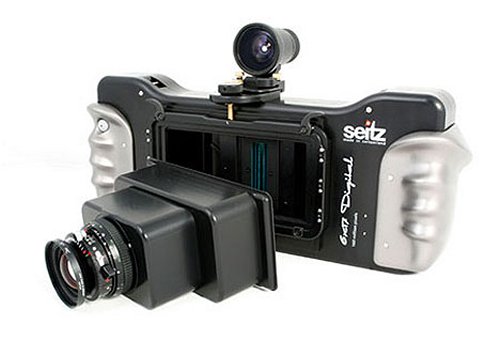
160 Megapixel Camera from Seitz


This odd-looking camera that looks like a cross between a vintage and modern version captures odd-sized pictures at an incredible 160 Megapixels.

Don’t look for this one at your local Best Buy. It’s for specialty photography and the prices for a kit can go as high as $40,000. Notice how the grip ergonomics have been worked out to help keep a firm hold on this expensive beast. It’s MUCH bigger than your average point and shoot, at 6 x 17 inches. One full resolution image taken with this camera at 48-bit colour depth will take up 900 MB of storage space!

Obviously it takes some massive memory to use this camera. It can also be operated remotely using a PDA. If you take photography this seriously, you may be forced to sell your home to keep snapping pictures.

With the revolutionary Seitz 6x17 Digital you can:
Create a high-resolution (160 million pixel) 6x17 digital scan in just one second
Capture action thanks to a minimum exposure speed of 1/2000 sec. (per pixel) - images full of speed, motion and life!
Benefit from an outstanding image quality in virtually all light situations:- 16-bit per channel (48-bit RGB) colour depth- anti-blooming- low noise- dynamic range of 1:2,600 (11 f-stops)- Seitz image optimisation algorithms
Use world-class large format Schneider or Rodenstock lenses - or reuse your existing set of lenses
Process a high-definition high dynamic range panorama directly in the RAM of the computer (single-pass, multi-pass)
Use a very user-friendly software with very advanced features
Take advantage of the latest technology in tablet PCs for image control, display and storage
Remove the Seitz D3 digital scan back and use it with the Roundshot D3, the Alpa family of medium format cameras (Alpa 12 SWA, WA, TC, XY) or with other medium or large format cameras (in the future)

credits: Conner Flynn at Slipperybrick.com
and
Check out more details at roundshot.ch
and see D3 sample images at http://www.roundshot.ch/xml_1/internet/de/application/d438/d925/f941.cfm

Photo of the day: Student Living in Vancouver, Canada


Photography lovers who liked this also liked:

rockies acrylic prints
alpine acrylic prints
rocky mountains acrylic prints
snow acrylic prints
spring acrylic prints
season acrylic prints
brown acrylic prints
strength acrylic prints

religious acrylic prints
church acrylic prints
churches acrylic prints
god acrylic prints
holy acrylic prints
spirituality acrylic prints
sculptures acrylic prints
statues acrylic prints

faith acrylic prints
http://fineartamerica.com/art/all/monuments/acrylic+prints
sculpture acrylic prints
bible acrylic prints
famous acrylic prints
people acrylic prints
mural acrylic prints
murals acrylic prints

tiles acrylic prints
tile acrylic prints

Sunday, January 20, 2008

The Digital Photography Experience

Though Apple hasnt' re-introduced a digital camera since it's short lived QuickTake camera back in 1994, this year's Macworld Conference introduced what it calls The Digital Photography Experience, set up for attendees to get "hands-on demonstrations, training, and tips on everything from cameras, to printers, to hosting services, to asset management, and more."
Though of course Macworld is not a photography conference, I think in the coming years, we'll see even more focus on digital photography at Macworld, along with more software and even hardware support from Apple for digital photographers.
See a few highlights from the exhibit floors: at mymac.com

MyMac welcomes reader feedback. Please REGISTER to become a free contributor, or LOGIN.

Credits: Bakari Chavanu

Picture of the day: Harbor in Vancouver, Canada

Photography lovers who liked this also liked:

adventure art
adventure canvas prints
adventure framed prints
adventure acrylic prints
adventure prints
adventure posters
adventure greeting cards
adventure photos

hobby art
hobby canvas prints
hobby framed prints
hobby acrylic prints
hobby prints
hobby posters
hobby greeting cards
hobby photos

jump art
jump canvas prints
jump framed prints
jump acrylic prints
jump prints
jump posters
jump greeting cards
jump photos

diamond metal prints diamond metal prints